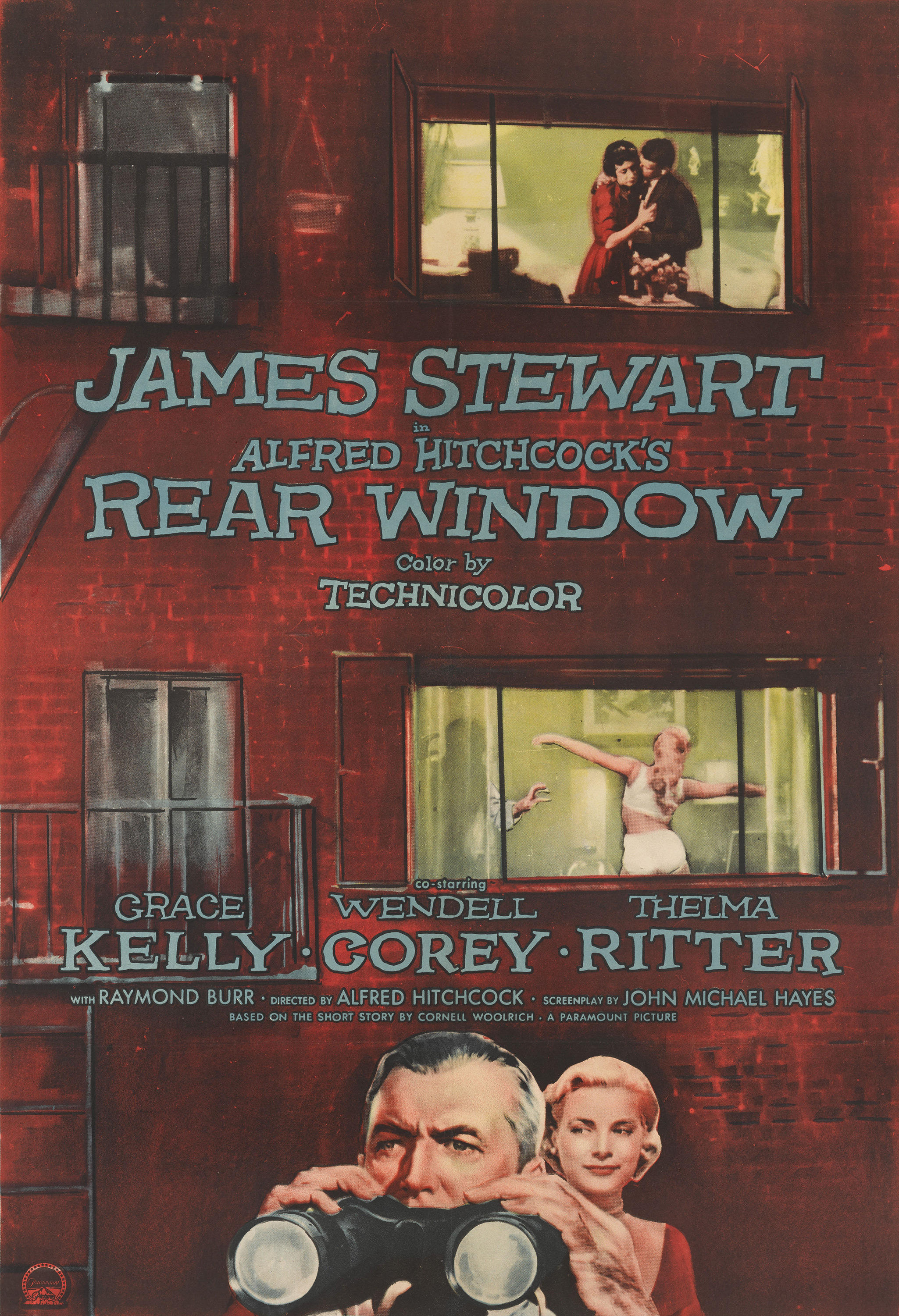

Stuck in a full leg cast and listless in his New York apartment, adventurous photographer spends his recuperation spying on the neighbors he can see out the window. A film by Alfred Hitchcock, starring James Stewart, Grace Kelly, Wendell Corey, Thelma Ritter, Raymond Burr, Judith Evelyn, Ross Bagdasarian, Georgine Darcy, Sara Berner, Frank Cady, Jesslyn Fax, Rand Harper, Irene Winston, and Havis Davenport.
REAR WINDOW
Alfred Hitchcock
(1954)
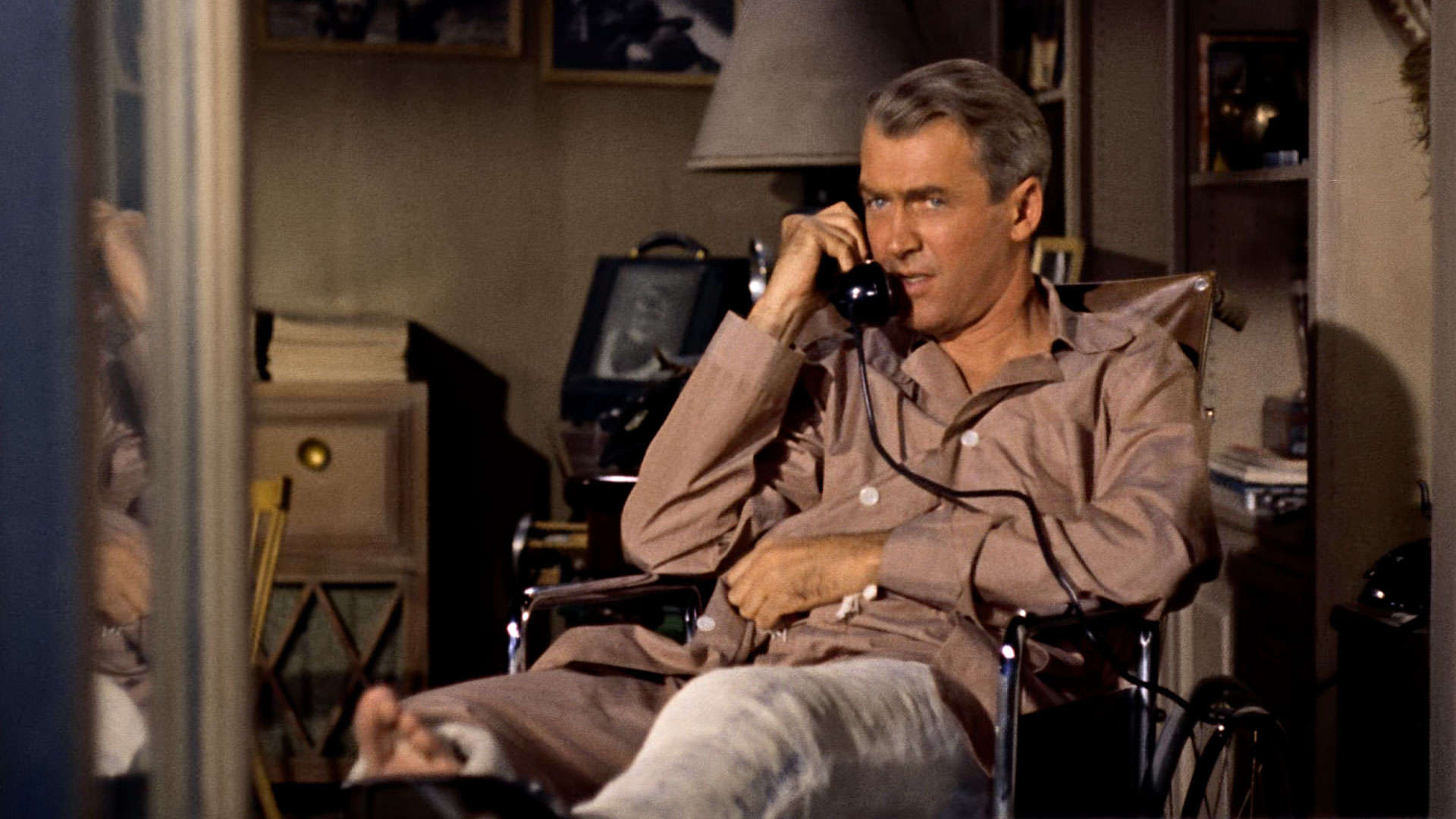
Professional photojournalist L.B. Jefferies (James Stewart) lives alone in his Greenwich Village apartment, recovering from a racetrack assignment that left him with a broken leg. He’s confined to a cast from his waist down to his left foot, and his camera was destroyed in the accident. Jeff receives a call from his magazine editor Gunnison (Gig Young), who congratulates him on finally getting the cast removed after seven weeks. Jeff corrects him, explaining that he has the wrong week as the cast doesn’t come off until next Wednesday. Before hanging up, Gunnison mentions he was calling about a big assignment in Kashmir. The bureau chief tipped him off that morning about the region being on the verge of erupting, presenting a chance for a major scoop. Gunnison considered sending Jeff, but with him still in the cast, he’ll assign Morgan or Lambert instead.
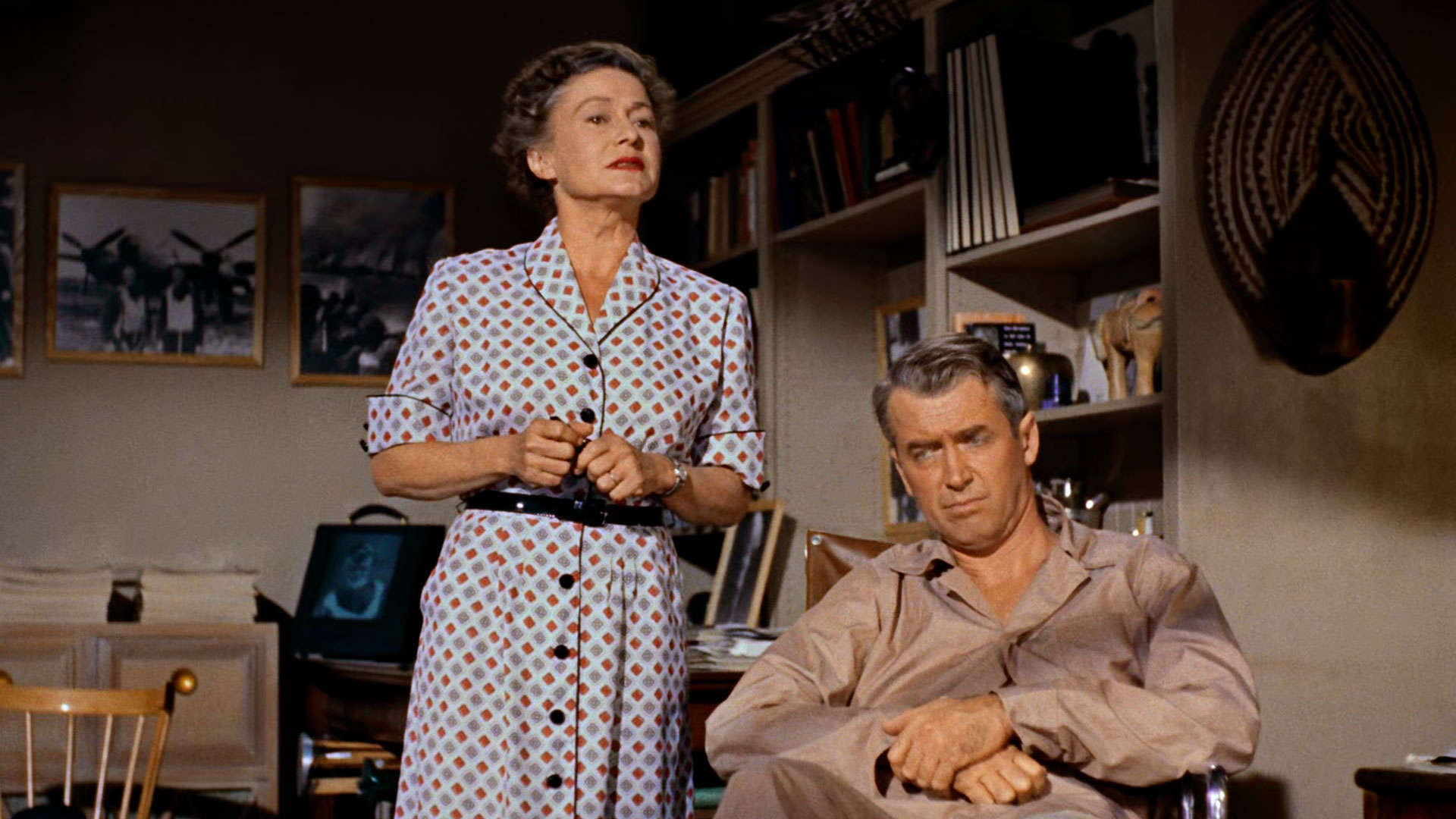
Bored, Jeff spends his days staring out his window at a courtyard surrounded by apartments. He watches his neighbors going about their daily routines, able to see everything because they’re either outside or have left their blinds open to combat the heat wave. Later, Jeff is visited by Stella (Thelma Ritter), a nurse assigned to check on him during his recovery. When she catches him watching the neighbors, she warns him that New York State sentences Peeping Toms to six months in the workhouse. Jeff confides in Stella about his reluctance to marry his socialite girlfriend, Lisa Fremont. She wants marriage, but he’s not ready. He explains that she’s too perfect, too talented, too beautiful, and too sophisticated. He doesn’t feel right for her because he’s a photojournalist who travels the world and never has more than a week’s salary in the bank.
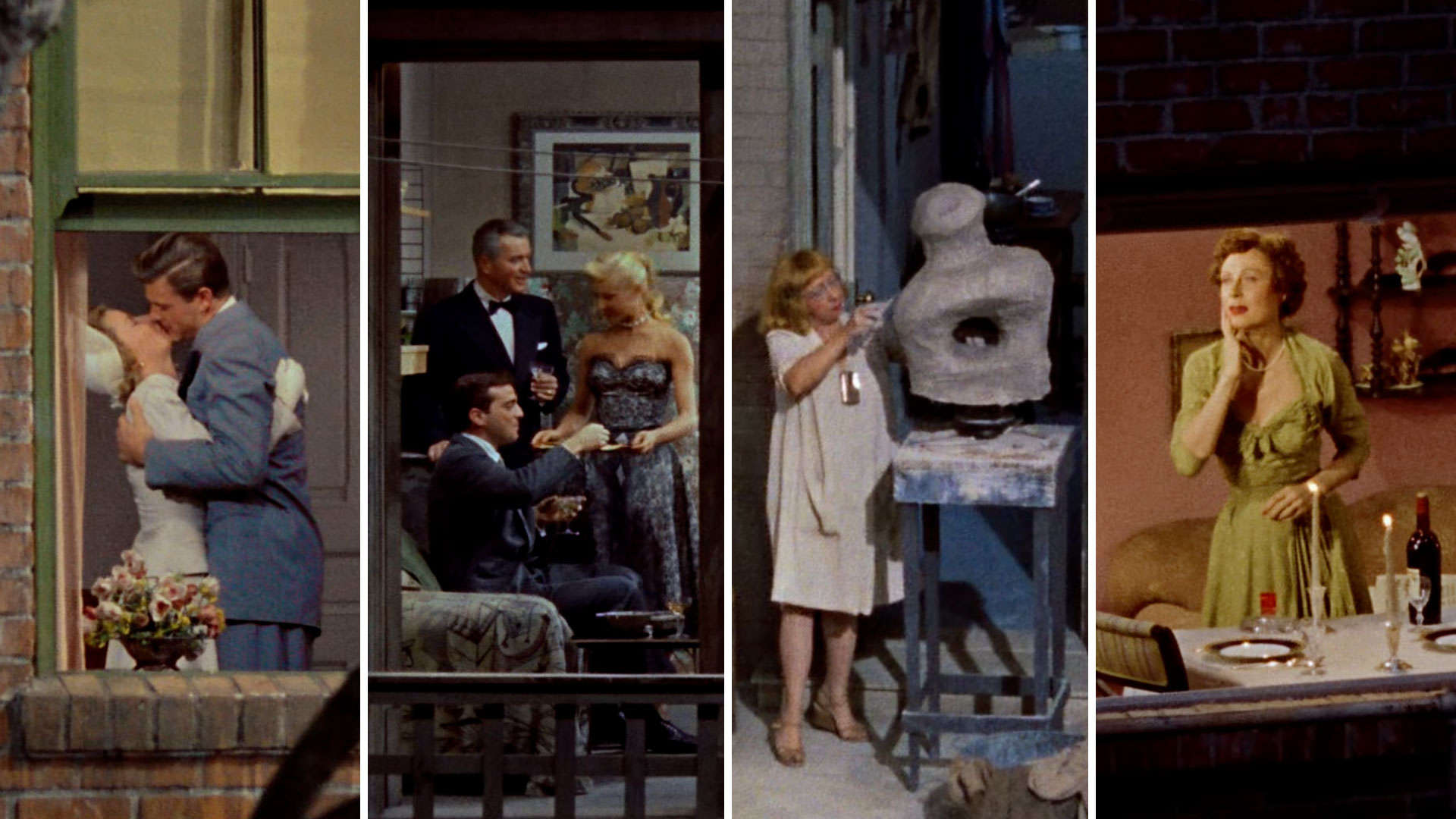
Jeff’s neighbors include a young couple, Harry (Rand Harper) and his newlywed wife (Havis Davenport) who have just moved in; sultry ballet dancer Miss Torso (Georgine Darcy) whose apartment is often visited by gentlemen; eccentric sculptor Miss Hearing Aid (Jesslyn Fax); and desolate woman Miss Lonelyheart (Judith Evelyn) who sometimes stages imaginary dates.
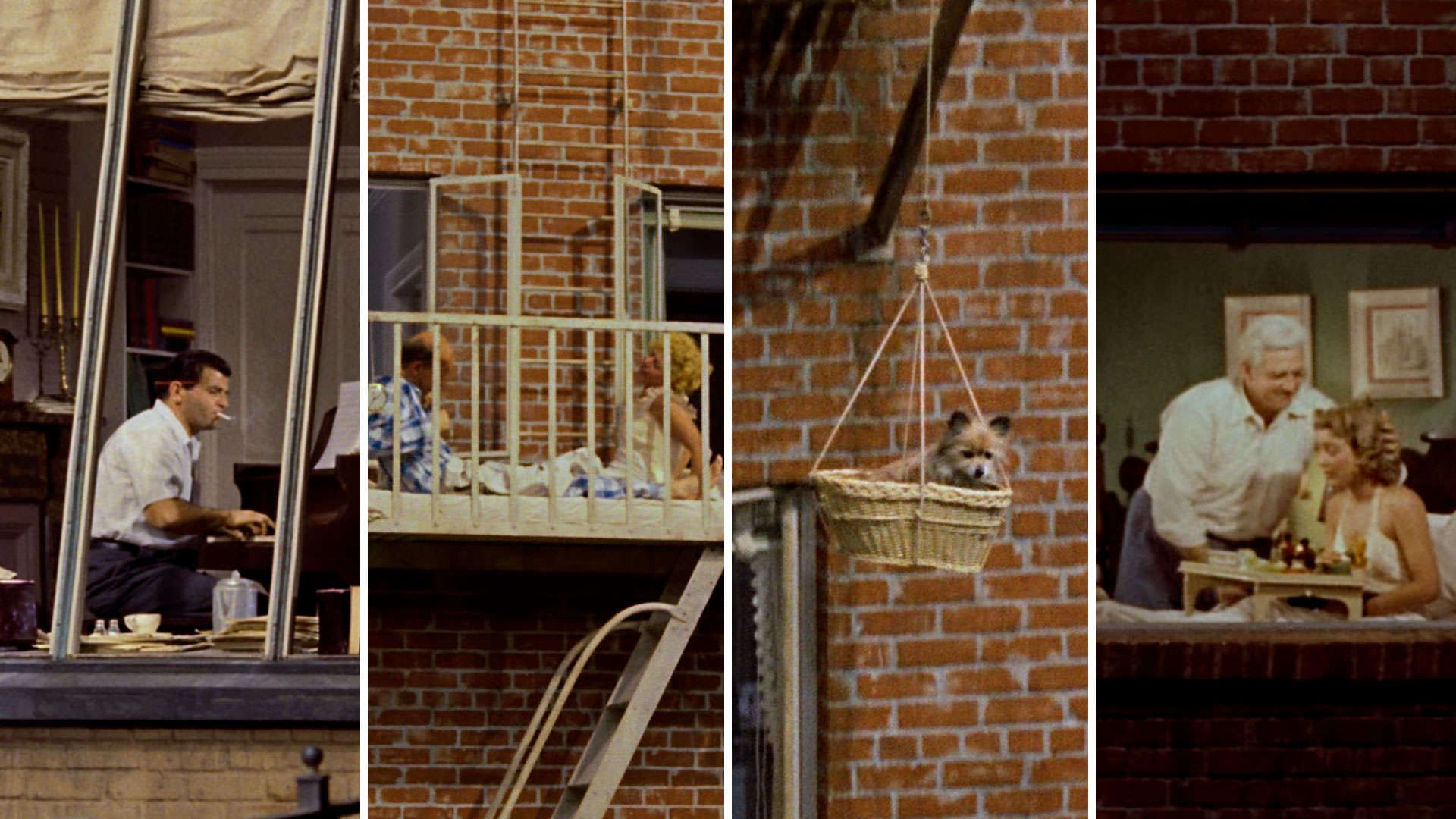
The list continues with a songwriter (Ross Bagdasarian) who plays piano in his studio apartment; an elderly couple (Sara Berner & Frank Cady) living with a small terrier dog; and finally, the salesman Lars Thorwald (Raymond Burr) and his bickering wife Emma (Irene Winston).
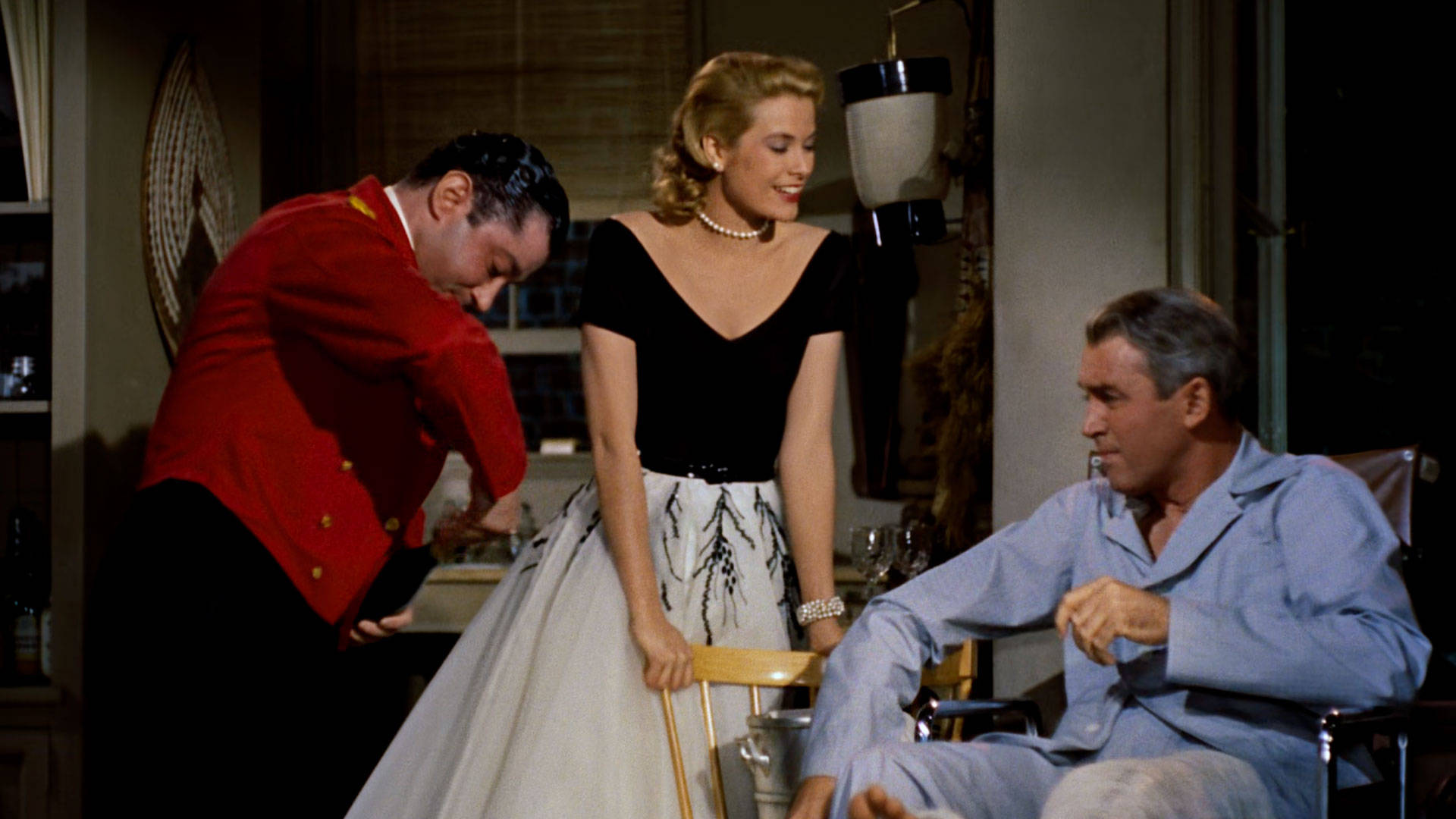
Later that evening, Jeff’s girlfriend Lisa Fremont (Grace Kelly) visits him at his apartment wearing a new $1,100 dress fresh from Paris. Jeff is taken aback by the price, but Lisa points out that the fashion house sells dresses like this a dozen times a day. She insists it’s worth it, even if she had to pay for it herself. To celebrate Jeff’s last week in the cast, she surprises him with a fine dinner, having brought Carl the waiter (Ralph Smiley) along to bring in the food and wine from 21 Club.
In the 1950s, the 21 Club reigned as New York’s ultimate power-dining enclave at 21 West 52nd Street, blending Prohibition speakeasy mystique with high-society allure. Founded in 1930 by cousins Jack Kriendler and Charlie Berns, it boasted a legendary secret wine cellar stocked with celebrity bottles, an iron raid gate, and 37 jockey statues gifted by racing magnates like the Vanderbilts. Presidents from Franklin Delano Roosevelt on dined there alongside Hollywood stars and fashion insiders, savoring $2.75 burgers and classic American dishes.
Lisa tells Jeff about her day. She spent all morning in a sales meeting, then rushed to the Waldorf for a quick drink with Madame Dufresne, who had just arrived from Paris with insider reports. Next, she had lunch at the 21 Club with people from Harper’s Bazaar, where she ordered their dinner. She then attended two fall showings twenty blocks apart, followed by cocktails with Leland and Slim Hayward while trying to secure his new show. After all that, she rushed home to change before coming to see him. Lisa suggests he could open his own studio here, leave the magazine, and pick his own assignments. She assures him she could line up at least a dozen fashion portrait assignments by tomorrow, but Jeff shows little enthusiasm for the idea.
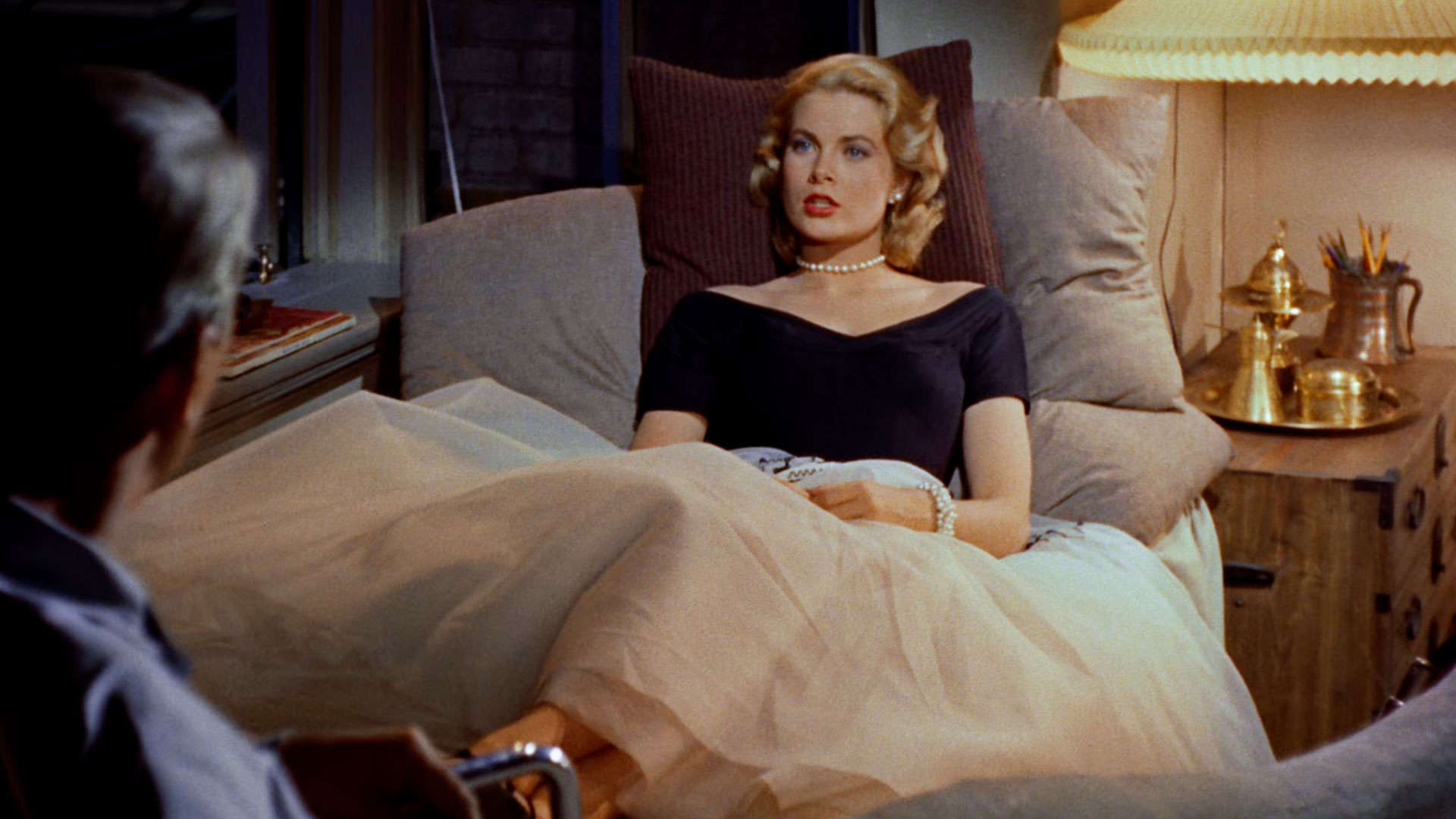
The two get into a heated argument over their future. Jeff insists their relationship won’t work because he travels constantly for work. He doesn’t think Lisa can handle the poor living conditions that come with his assignments, even though she insists she can. She argues that his job is no different from being a tourist on an endless vacation. Lisa eventually leaves after Jeff makes it clear he won’t stay in New York and she can’t come with him.
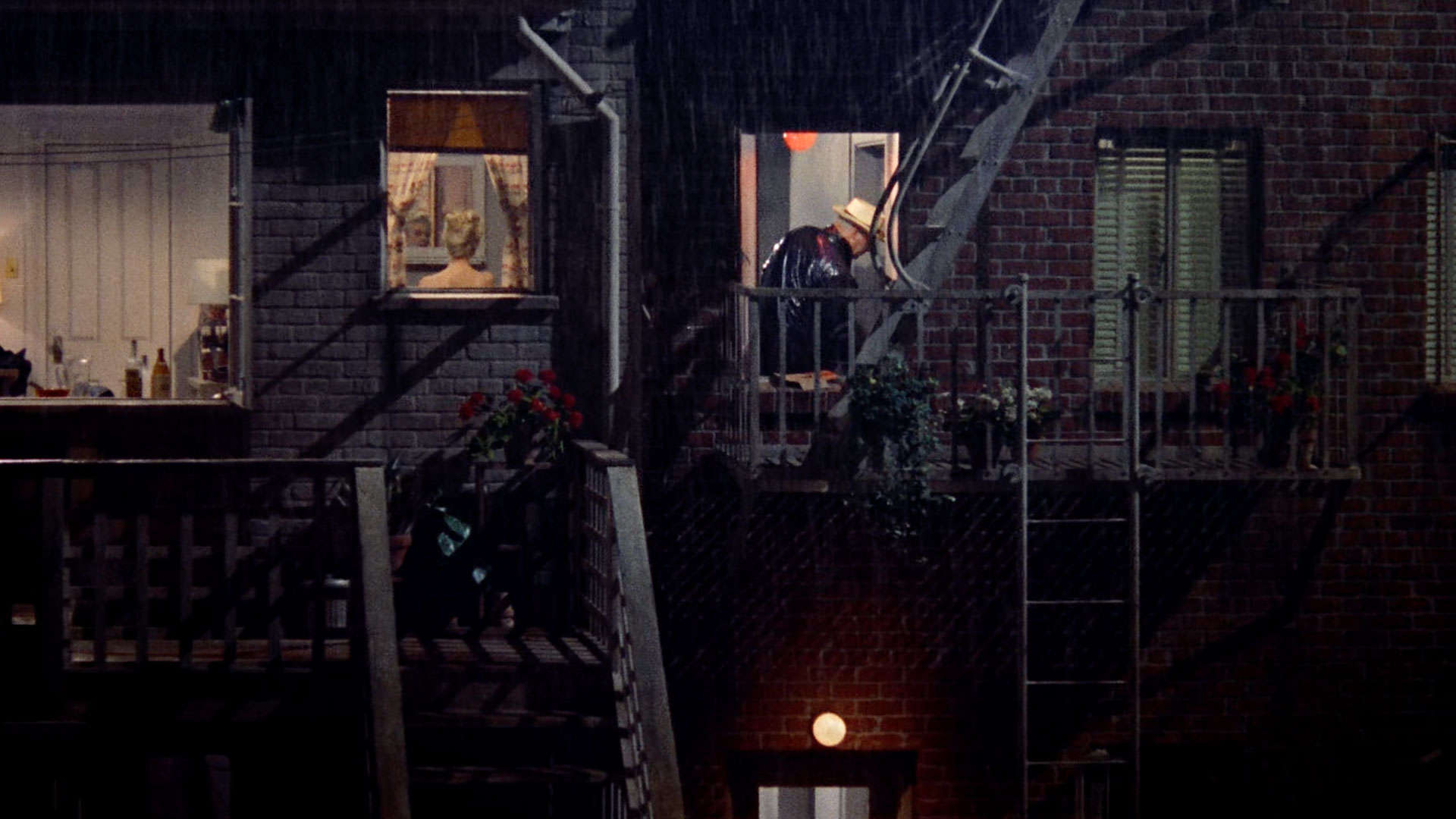
After Lisa leaves, Jeff returns to watching his neighbors through the window, only to find most apartments either dark or with their shades drawn. Suddenly, he hears a woman scream, followed by the sound of breaking glass, then silence. Jeff scans the courtyard trying to find the source but can’t locate it. Eventually, he dozes off in his wheelchair. He wakes during the night to a thunderstorm and pouring rain. At 1:55 AM, Jeff spots the salesman leaving his apartment in a black raincoat, carrying a silver suitcase. Forty minutes later, the salesman returns with the suitcase, but Jeff can’t see into the apartment because the blinds are drawn. Moments later, the salesman leaves again with the same suitcase. The unusual activity raises Jeff’s suspicion.
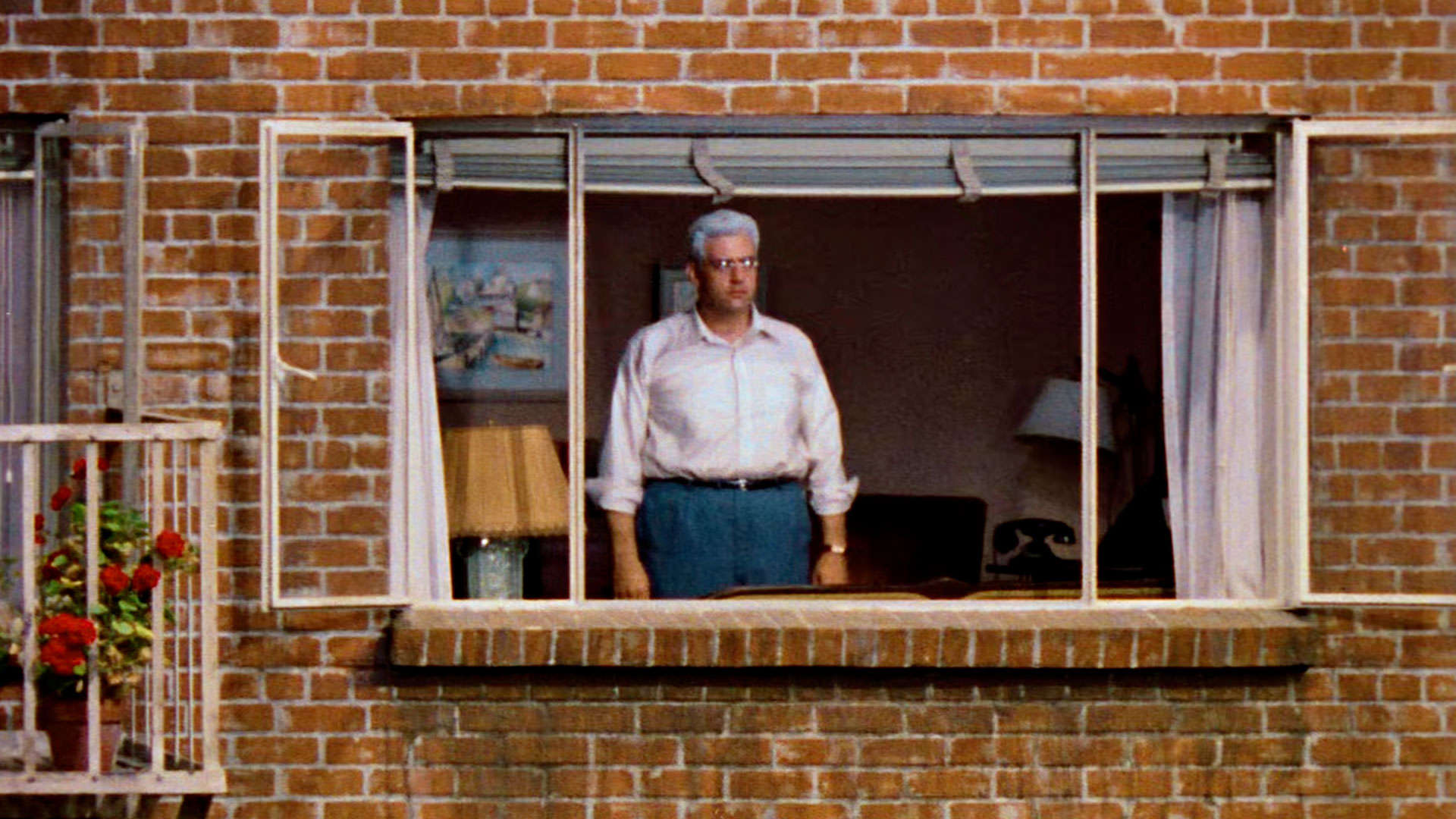
The next day, Jeff notices the salesman glancing out his window, seemingly checking if anyone is watching. The salesman walks to the window and looks down at the courtyard, where a small terrier is digging in his flower bed. Jeff continues watching and sees the salesman put jewelry samples into his suitcase, suggesting they had been taken out earlier to make room for something else. Then the salesman wraps a small saw and a butcher knife in old newspaper.
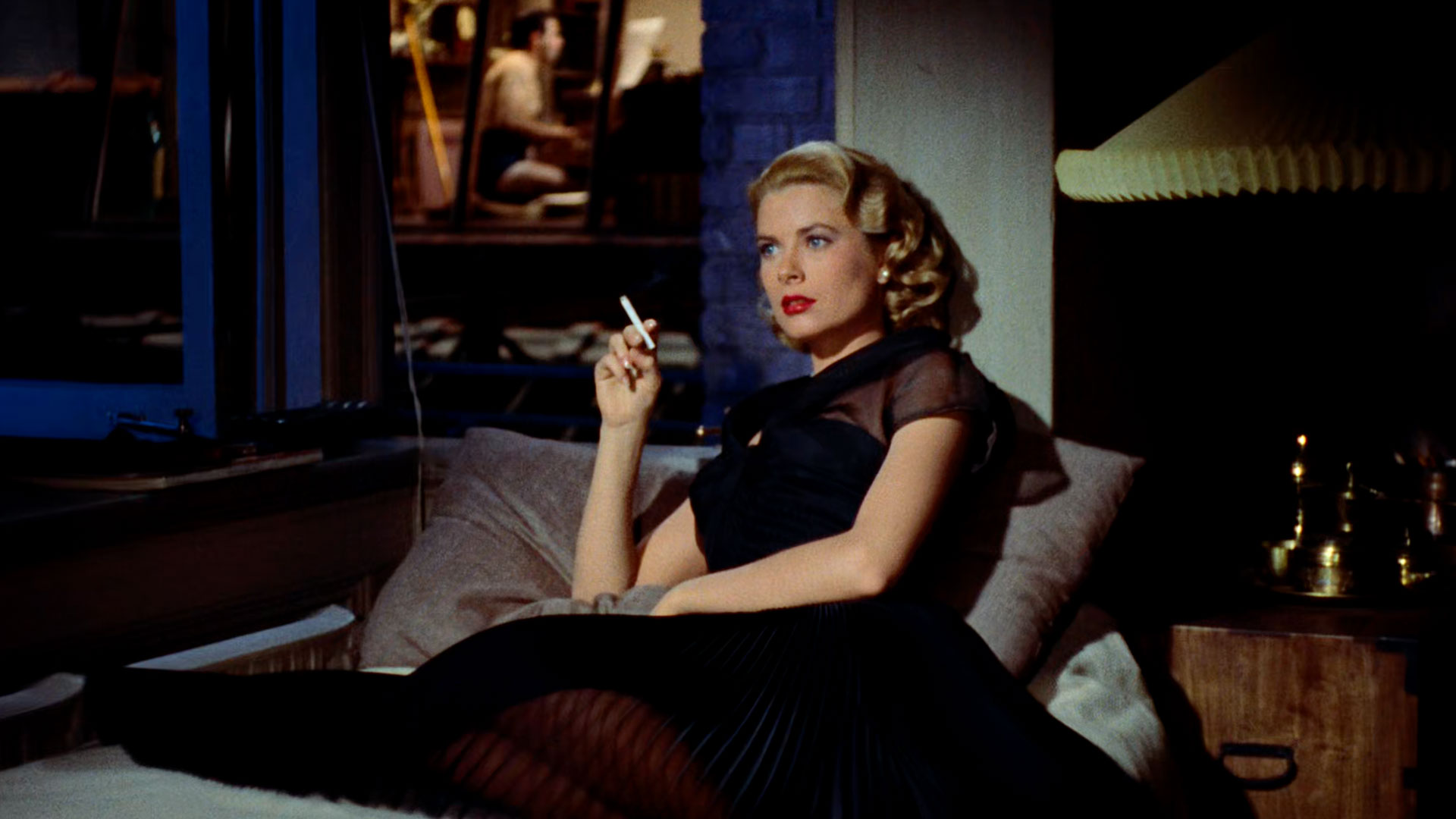
When Lisa visits Jeff that evening, he shares his observations and asks what she thinks about a man leaving his apartment three times on a rainy night with a suitcase and returning each time. Lisa initially dismisses his concerns and seems a bit upset that Jeff is more interested in his neighbor’s activities than in her. She accuses him of being too obsessed with spying and letting his imagination run wild. Just then, the salesman returns to his apartment with ropes in his hands. Jeff watches him walk through the apartment into the bedroom, but the shades block his view of what’s happening inside. Lisa threatens to leave if Jeff doesn’t stop this spying, pointing out that no murderer would parade his crime in front of an open window. At that moment, the bedroom blinds open, revealing the salesman tying up a large box with rope, a rolled-up mattress visible behind him. The salesman’s wife is nowhere to be seen. Lisa begins to think Jeff’s suspicion might be right. She then heads to the building across the courtyard and calls back with information. The mailbox for the second floor rear apartment is labeled Mr. and Mrs. Lars Thorwald, and the building’s address is 125 West 9th Street.
Grace Kelly refused to smoke in films to maintain her pristine image, but Hitchcock insisted for authenticity. They compromised by having her hold a lit cigarette, creating the illusion without actual smoking.
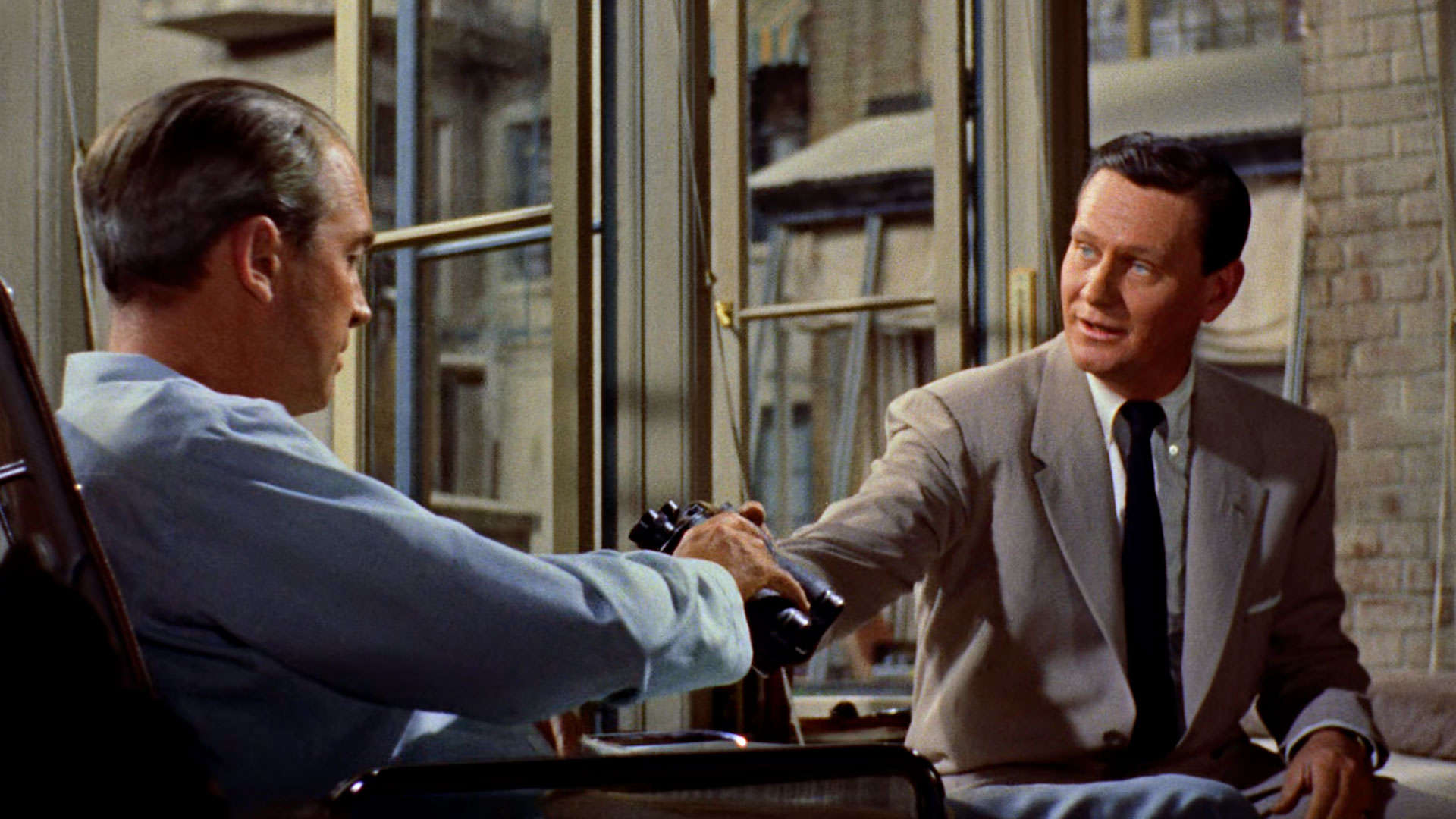
The next day, Jeff calls his detective friend Tom Doyle and urges him to come see the whole setup with his neighbor, whom he suspects of murder. Stella and Jeff spot two delivery men entering Lars’ apartment and carrying out a large wooden trunk. Stella runs off to get the name of the freight company, but the truck drives away before she can reach it. When Detective Doyle (Wendell Corey) arrives, he questions how Jeff knows there was a murder if he didn’t see the killing or an actual body. Jeff explains Lars’ suspicious behavior, just as he told Lisa. Doyle admits it all sounds mysterious, but without evidence, it could be any number of things. Murder is the least plausible.


Seeing isn't always believing.
—
A film by Alfred Hitchcock, starring James Stewart, Grace Kelly, Wendell Corey, Thelma Ritter, Raymond Burr, Judith Evelyn, Ross Bagdasarian, Georgine Darcy, Sara Berner, Frank Cady, Jesslyn Fax, Rand Harper, Irene Winston, and Havis Davenport.
Doyle points out that it’s too obvious and a stupid way to commit murder in full view of fifty windows. He adds that the man isn’t panicked, which doesn’t match his experience working homicide. However, Doyle promises to look into it on his own time without reporting to the department, which could lead to embarrassing publicity for Jeff if it turns out there was no murder.
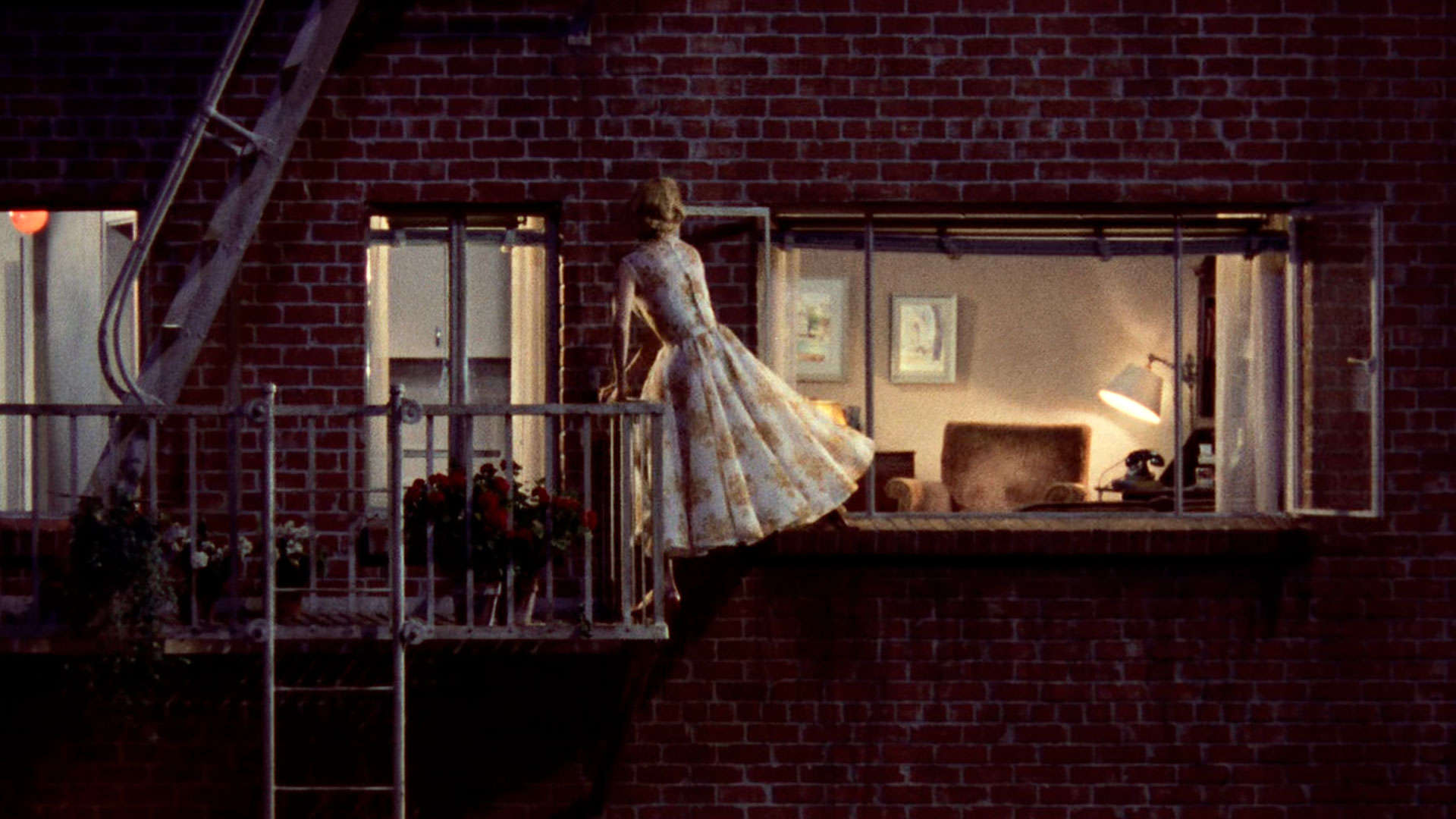
To find the evidence he believes is hidden under the flower bed in the courtyard, Jeff enlists the help of Stella and Lisa. He finds Thorwald’s phone number in the phone book and calls him to lure him out of the apartment. He threatens to contact the police unless Thorwald meets him at the bar in the Albert Hotel immediately. With Thorwald gone, Lisa and Stella investigate the flower bed, but they’re unable to find anything buried there. Lisa then decides to climb into Thorwald’s apartment through an open window.
Kelly performed her own risky fire escape climb into the villain’s apartment, defying studio objections. Hitchcock filmed it secretly during lunch, completing the stunt in one take three stories up with minimal safety gear.
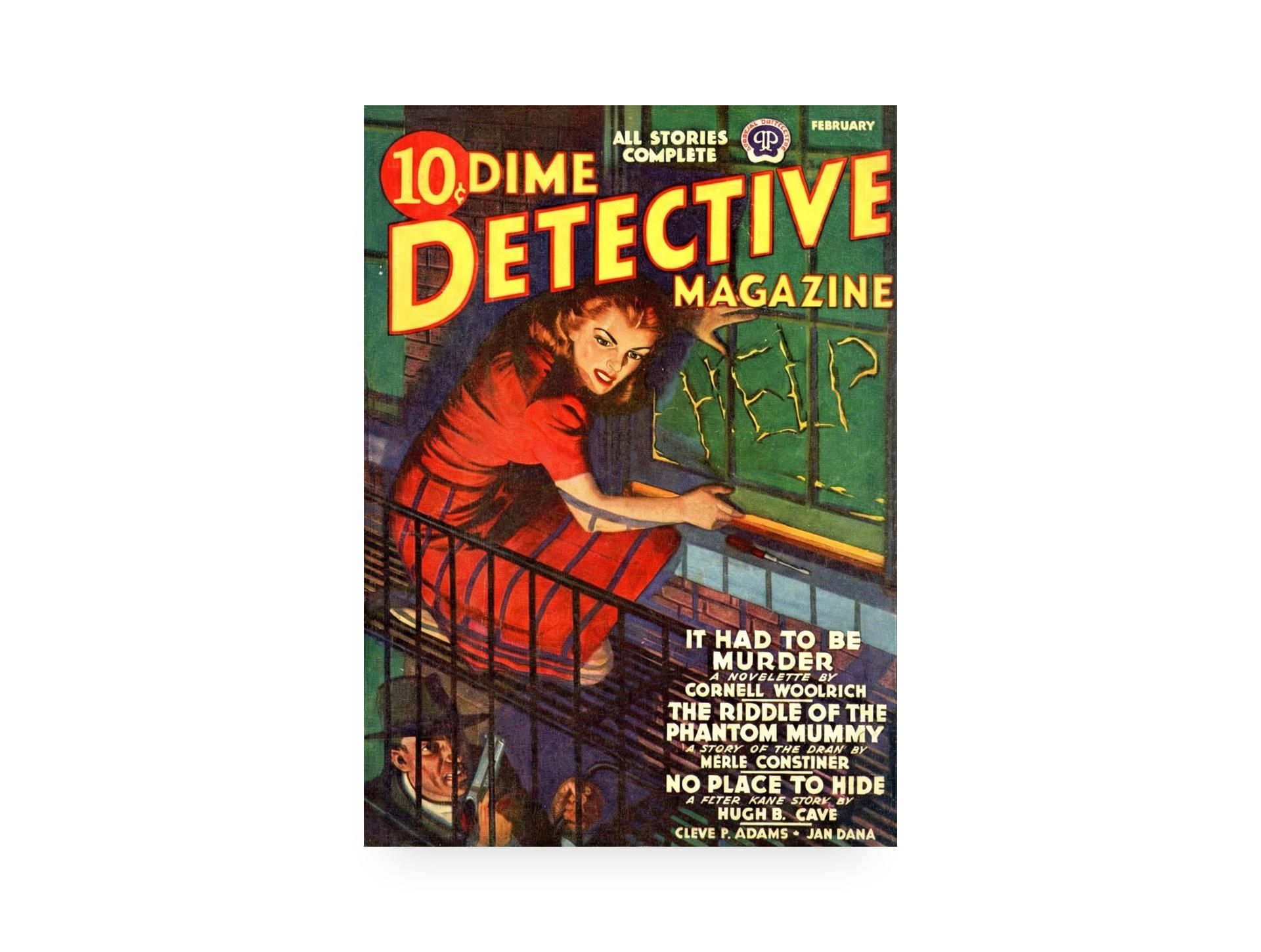
Directed by English filmmaker Alfred Hitchcock from a screenplay by John Michael Hayes, REAR WINDOW is a mystery thriller following a professional journalist who believes one of his neighbors committed a murder. The film is based on Cornell Woolrich’s 1942 short story “It Had to Be Murder”.
Cornell Woolrich’s short story “It Had to Be Murder” was first published in Dime Detective Magazine in February 1942. It follows a man immobilized by a leg injury who spies on his Greenwich Village neighbors from his apartment. Confined to watching through rear windows across a courtyard, the unnamed narrator observes their daily routines. His attention becomes fixated on one couple when he begins to suspect the husband has murdered his nagging, bedridden wife.
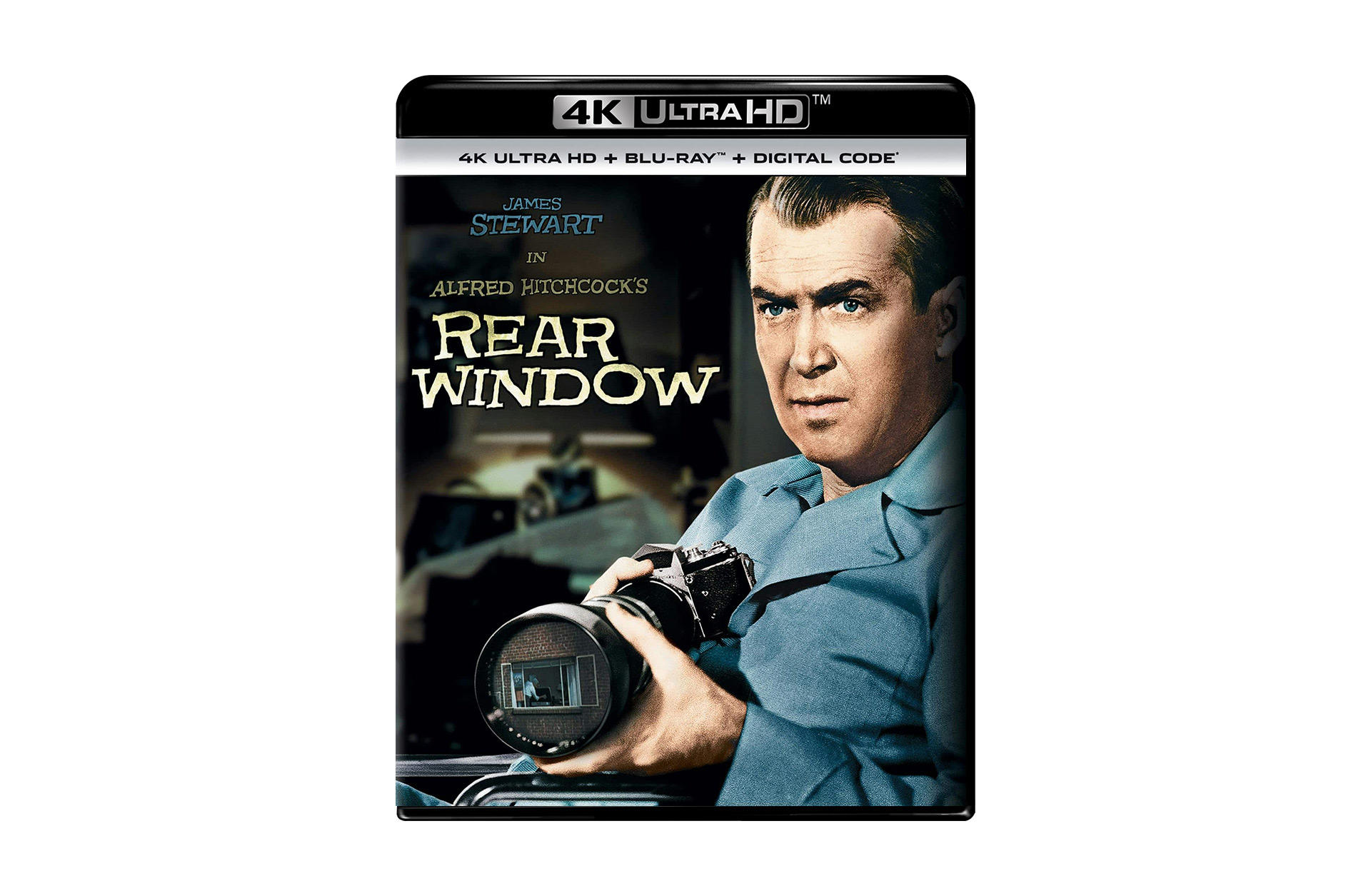
I love mystery thrillers, especially when the protagonist isn’t a detective. The cast delivers convincing performances, and despite focusing on just one suspect, the filmmaker keeps us captivated throughout. The narrative remains exciting as we piece together information from what the supporting characters say, trying to figure out whether a crime actually happened or if it’s all in the mind of a man who spends his days secretly watching his neighbors from inside his apartment. One of the great aspects of mystery and detective films from that era is how crisp and clear everything looks. We can see details even in the far background, which means the attention to detail had to be nearly impeccable. This stands in sharp contrast to modern films that rely heavily on depth of field, limiting our focus to a single subject while blurring everything else in the background. That approach undermines detective narratives, where viewers need to search for clues hidden in plain sight. Such clues would be impossible to spot with modern techniques unless they’re positioned right at the center of the frame. REAR WINDOW premiered in New York City on 4 August 1954, before its wider theatrical release in the United States on 1 September. It’s considered one of Hitchcock’s best films and ranks among the greatest films ever made. Against its $1 million production budget, REAR WINDOW grossed $27 million during its initial release. The film was re-issued in 1983, earning over $9 million domestically. For its 70th anniversary, Fathom Events presented a special theatrical engagement starting 25 August 2024, screening the film in a remastered format. Rear Window’s 4K UHD Blu-ray was released by Universal Pictures on 7 September 2021, as a standalone edition and part of the Alfred Hitchcock Classics Collection. This remaster delivers a sharp 2160p HEVC/H.265 transfer with HDR10, sourced from a new 4K scan of the original camera negative. The disc features a 1.66:1 aspect ratio and 97 Mbps bitrate, paired with DTS-HD Master Audio 2.0 mono in English, plus Spanish and French tracks. Special features carry over from previous Blu-rays, such as John Fawell’s feature-length commentary, the “Rear Window Ethics” documentary, narrated production photographs, James Stewart’s re-release trailer, and a Hitchcock/Truffaut excerpt. Editions span standard packaging, a Best Buy exclusive SteelBook, and international releases.